🎉 How was the last chapter? Comment down your thoughts.
🛎️ New to Nandini and Rajeev’s world? No worries! Catch up on Dil ke Karib (Chapters 1–55) on my website before diving in. Her story is just getting started… 💔✨
🔥 Don’t miss:
📖 Read: “Married to My Brother-in-Law, In Love with His Brother” — a forbidden 1950s romance filled with duty, desire, and defiance.
✨ Two stories. One unforgettable journey.
Now, let’s dive back into the latest chapter… 👇
******
Chapter 56 – I am SOBHA
The village stood silent, eyes fixed on the dam where Vikrant’s body floated motionless in the dark waters below. The sun glinted off the ripples, casting sharp shadows across faces—curiosity, horror, relief, and judgment all tangled together.
Before anyone could speak, Vikrant’s parents stepped forward, voices trembling with accusation.
“It is her fault,” his mother hissed, eyes blazing. “If he had just tried to fix our son, he would never have been tempted down the wrong path.” Her voice cracked, grief cutting through anger.
“She brought ruin upon our family,” his father growled, fists tight. “A curse on our name and on this village! A wife should stand by her husband, not lead him astray.” The crowd murmured in agreement, casting disapproving glances at Sobha, whose tears ran freely.
Sobha’s stomach tightened. Even as the tyrant who had ruled through fear floated powerless, the blame landed squarely on her shoulders.
She bit her cheek until it bled. Pain shot through her jaw, grounding her. Fix him? Me? No. She had endured, survived, and outwitted him.
Patriarchy needed a scapegoat—and she had been chosen.
Why? Because men can be fixed, but women are always blamed for the sins of others.
Yet beneath the weight of judgment, a strange calm settled.
Vikrant was gone.
The terror. The fear. The humiliation he inflicted—all undone. And still…a hollow ache gnawed at her chest.
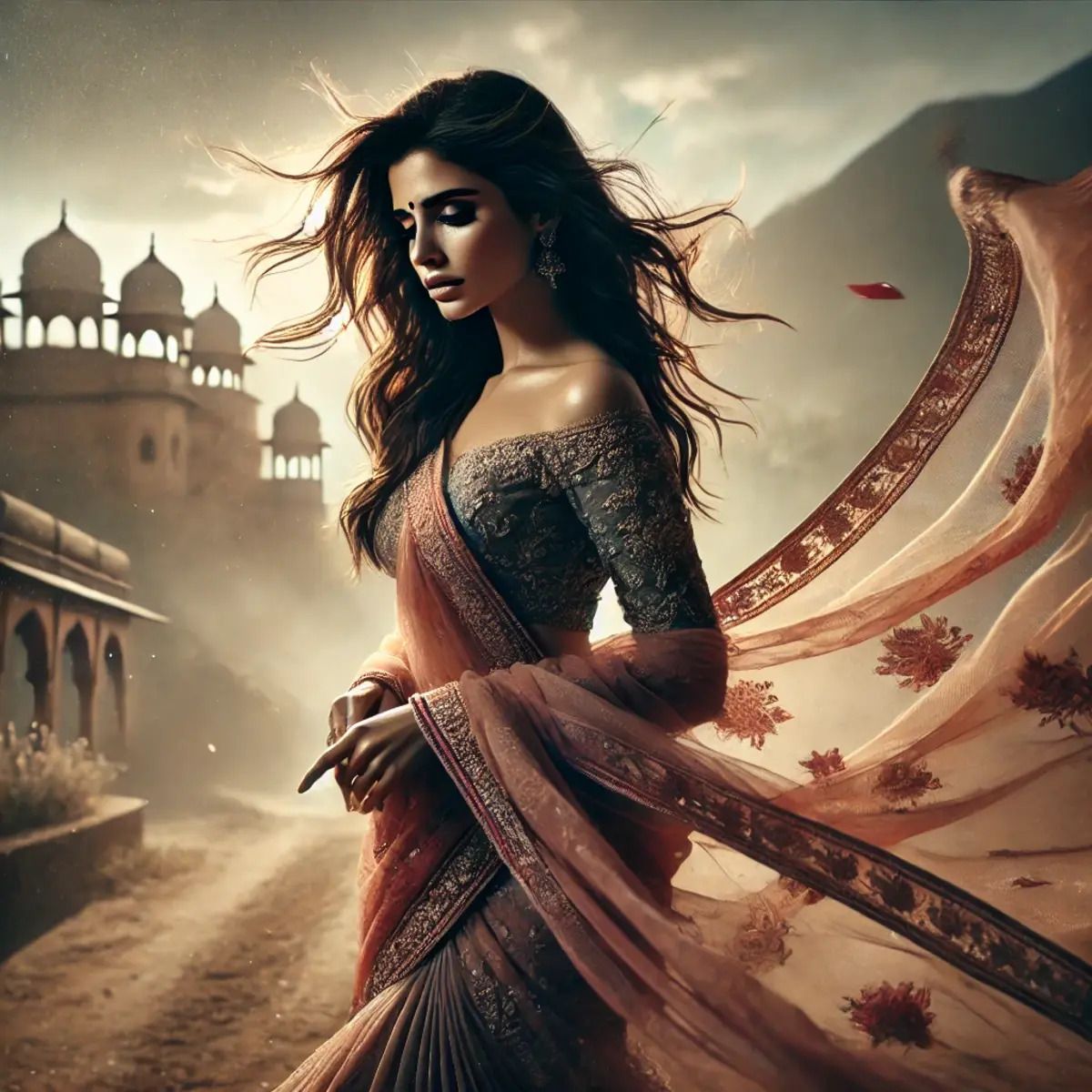
“I am no one's wife…” Sobha laughed—low, fierce, unstoppable. Each note cut through the murmurs, slicing away blame, fear, and the shadows of the past. This was not mockery. This was freedom.
She had survived his cruelty and orchestrated his downfall. Blame, fear, patriarchy—they were meaningless. They wanted her to shrink, to feel guilt. Instead, she laughed, letting it echo across the stunned crowd.
Fix him? Why? Because he was a man, or because men are never wrong? She would not play that game. She would stand tall, unapologetic, free.
Raghav stepped beside her, calm as ever. He let the murmurs rise, then fall to silence with a single, commanding sentence:
“Enough. Do not curse the woman who freed you from a tyrant. Do not shame her for sins she did not commit.”
The villagers wavered. Truth, steady and unflinching, outweighed fear.
Sobha’s father, Mushi, lingered nearby, hands shaking.
"Who are you to say such things, Raghav? Who are you to her?" Vikrant's father flared, stepping forward. Raghav raised a hand to stop him.
“I am just a man who believes in justice,” he said firmly. “Blaming a woman for another’s sins? That ends now. Your son made a mistake—and he paid for it. Let the past go. Focus on healing.”
Mushi’s eyes filled with tears as he absorbed the weight of Raghav’s words. Years of social conditioning battled paternal instinct, but Raghav’s hand on his shoulder steadied him.
“She is not a curse; she is a survivor. Take her home. Let the village see strength in truth, not fear,” Raghav said.
"NO… She will go with us as Vikrant's widow," his mother protested, voice trembling with grief and anger.
"Massi, don’t make me repeat myself. Sobha will go with Mushi Ji," Raghav said, firm, unwavering.
The village held its breath as tension thickened the air. Mushi’s gaze met Sobha’s. Slowly, deliberately, he nodded, a single tear escaping. At last, he saw her: strong, unyielding, untouchable.
Sobha exhaled, the hollow emptiness within her beginning to fill—not with vengeance, not with love, but with clarity of self.
“Blame me all you want—because blaming me is easier than facing the truth,” she whispered, voice steady. She lifted her head, shoulders straight, eyes meeting the villagers’. Each step she took was deliberate, unbowed, unbroken.
“I am no one’s wife. No one’s burden. I am simply Sobha. Sobha."
Mushi Ji drew her hand close to his chest. “You have always been strong, my daughter. I see that now—but being strong here… it will destroy you.”
The sun dipped behind the hills, casting long shadows across the village. Dust rose from the cobblestones, carrying the scent of earth and water. Judgment lingered—but it could not touch her.
Sobha smiled at a child hiding behind a mother’s pallu—Aarti. Her eyes sparkled with curiosity, yearning to learn, to speak, to be unafraid, just like Sobha.
Aarti’s gaze held the promise of learning, of questioning, of claiming her own place in the world.
Freedom was not the absence of pain—it was the reclamation of self. Sobha had survived, fought, and laughed in the face of blame.
For the first time, Sobha realized that her courage could ignite a fire in others, a blaze no darkness could extinguish.
She walked with Raghav beside her, not as a lover, but as a guardian of dignity and justice. Step by step, they left behind whispers, tyranny, and shadows.
Sobha was free. Fierce. Unbroken. She did not need revenge, validation, or love—only herself. Her laughter lingered in the air, a warning and a celebration. Her fire burned—untouchable, unshakable, entirely her own.
Would men ever let her live in peace? Would they try to dim her light again? They would find new scapegoats and new ways to undermine power.
Vikrant was dead, yet his shadow lingered—a reminder of the darkness she endured. Society might blame her for his sins, but Sobha carried that burden as her own strength. She stepped forward, head high, letting the sunlight touch her face.
She was free.
😈 Devil’s Note: I Am Sobha 💋
Oh, my loves… what a scene, right? Sobha didn’t cry—she laughed. And that laugh? It wasn’t madness, it was freedom.
Tell me, did you feel that shift too?
🔥 When a woman stops asking for pity and starts owning her power—doesn’t the world flinch just a little?
💫 Can a village built on silence survive a woman who dares to speak?
Now, let’s get one thing straight—Sobha isn’t our heroine. She was never meant to be.
But this story needed her. Because while Nandini is soft, tender, and forgiving, Sobha is the storm—fierce, flawed, and unforgettable. She’s not here to be loved; she’s here to shake things up.
Sometimes, a story doesn’t need another saint. It needs a sinner brave enough to laugh in the face of judgment.
And trust me, my loves… the fire Sobha lit? It’s just the beginning. 😉
— Shaar Shree ✨
